NHS Band 7 Take Home Pay Calculator 2026/27
| Basic Contract Pay (Gross) | £0.00 |
| High Cost Area Supplement (HCAS) | +£0.00 |
| Cumulative Total Gross Income | £0.00 |
| PAYE Income Tax Assessment | -£0.00 |
| National Insurance Contributions | -£0.00 |
| NHS Pension Contribution (Auto Tiered) | -£0.00 |
| Student Loan Repayment Deduction | -£0.00 |
| Contractual Salary Sacrifice Scheme | -£0.00 |
| Net Calculated Take-Home Payout | £0.00 |
* Automated Pension Tier Interlocking: Depending on extra shift allocations, enhancements, or location choices, Band 7 values sit near core pension threshold boundaries. Point 1 and 2 calculate at a **9.8% pension contribution rate**, while the Top Step Point (exceeding the £52,930 bracket floor) automatically triggers a **10.5% pension scale outgo**.
* The Tax Threshold Edge: Point 3 and beyond begin to cross out over the standard **40% Higher Rate Income Tax boundary line (£50,270)**. However, because NHS Pension allocations occur *pre-tax via Net Pay Arrangements*, your actual taxable gross is reduced, meaning less of your hard-earned top-slice income falls into the 40% tax bracket.
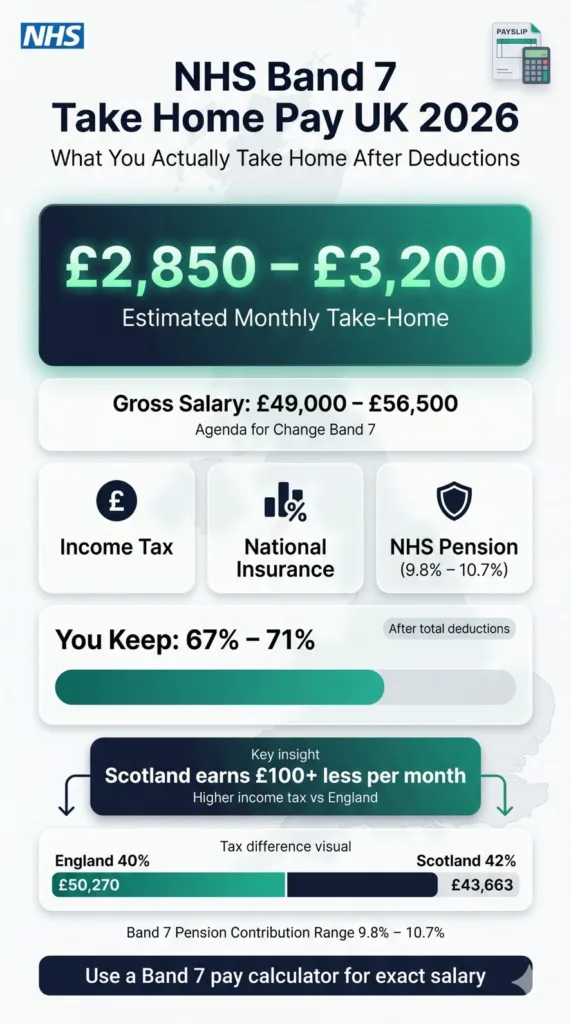
NHS Band 7 salary take home pay UK 2026 typically ranges from around £2,850 to £3,200 per month after deductions, based on a gross salary of roughly £49,000 to £56,500 under Agenda for Change. Pension contributions alone take about 9.8% to 10.7% of salary, while income tax and National Insurance further reduce net pay, meaning most Band 7 staff keep around 67%–71% of their earnings depending on location.
In Scotland, higher tax rates can lower monthly take-home pay by £100+ compared to England for the same role, making a Band 7 pay calculator essential for accurate net salary estimates.
This article tells you exactly what Band 7 staff take home in 2026/27, broken down by pay point, role, and nation. Every deduction is accounted for. You can also calculate NHS Band 2 Take Home Pay 2026/27 on our website.
What Is the NHS Band 7 Salary Range in 2026/27?
Under the Agenda for Change framework updated for 2026/27, Band 7 runs across three pay points: entry, mid, and top.
| Pay Point | Gross Annual Salary |
|---|---|
| Entry (Point 1) | £46,148 |
| Mid (Point 2) | £49,787 |
| Top (Point 3) | £53,187 |
These are the gross figures before any deductions. Your actual take-home pay depends on where you sit within the band, which UK nation you work in, your pension contribution tier, and whether you have a student loan.
A Band 7 advanced nurse practitioner at the top of the band earns £53,187 gross. That is not what lands in their bank account. After income tax, National Insurance, and NHS Pension contributions, the net figure is closer to £37,500 to £39,000 per year — depending on nation and loan status.
For a precise calculation based on your exact pay point and circumstances, use the NHS take home pay calculator which covers all bands and applies the correct tax rules for England, Scotland, Wales, and Northern Ireland.
NHS Band 7 Take Home Pay 2026: England, Scotland, Wales Compared
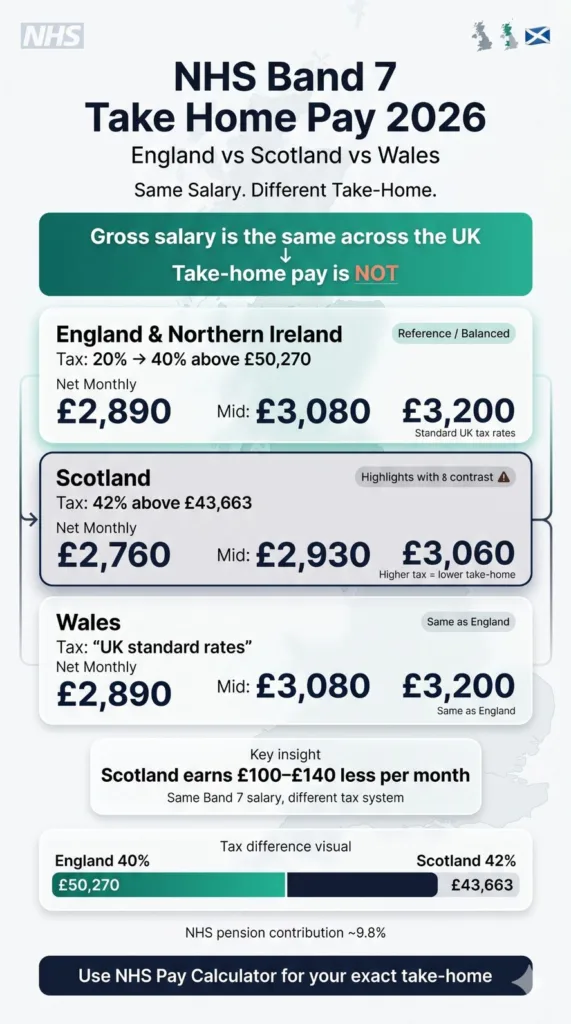
NHS Band 7 take-home pay 2026 is identical in gross salary across the UK (£46,148–£53,187), but net pay varies due to regional tax differences. In England and Northern Ireland, monthly take-home is roughly £2,890 at entry, £3,080 mid, and £3,200 at top, with standard UK tax rates and around 9.8% NHS pension contributions. In Scotland, higher income tax rates (up to 42% above £43,663) reduce monthly pay to about £2,760–£3,060, making take-home £100–£140 lower than England at the same salary point, while Wales closely matches England due to aligned tax rates.
England and Northern Ireland
In England and Northern Ireland, Band 7 staff pay income tax under standard UK rates: 20% basic rate up to £50,270, then 40% higher rate above that threshold.
At the Band 7 top point of £53,187, a small slice of income crosses into the 40% higher rate band — roughly £2,917 of earnings above £50,270 is taxed at 40%. This is something many Band 7 nurses and managers are surprised by.
| Pay Point | Gross | Est. Monthly Take-Home (England) |
|---|---|---|
| Entry | £46,148 | ~£2,890 |
| Mid | £49,787 | ~£3,080 |
| Top | £53,187 | ~£3,200 |
These figures assume standard pension contributions and no student loan. The pension tier for this salary range sits at 9.8%, which is a substantial deduction.
Scotland
Scotland applies its own income tax bands. The higher rate of 42% kicks in above £43,663 in 2026/27. This means the majority of Band 7 earnings in Scotland are taxed at 42% — a full 2 percentage points higher than the equivalent earnings in England.
A Band 7 senior physiotherapist working in NHS Greater Glasgow and Clyde at the entry point of £46,148 pays Scottish income tax at 42% on earnings above £43,663. The result is a meaningfully lower net salary compared to an identical role in England.
| Pay Point | Gross | Est. Monthly Take-Home (Scotland) |
|---|---|---|
| Entry | £46,148 | ~£2,760 |
| Mid | £49,787 | ~£2,930 |
| Top | £53,187 | ~£3,060 |
The gap between a Band 7 nurse in England and the same grade in Scotland can be £100 to £140 per month purely due to Scottish income tax — at the same gross salary.
Wales
Wales uses UK-standard income tax rates, so take-home pay for Band 7 staff in NHS Wales aligns closely with England figures at equivalent pay points.
NHS Band 7 Pension Contributions 2026
The NHS Pension Scheme uses a tiered contribution structure. Band 7 salaries sit almost entirely in the 9.8% contribution tier — one of the higher employee contribution rates.
| Salary Range | Pension Contribution Rate |
|---|---|
| £26,832 – £47,846 | 8.3% |
| £47,847 – £111,376 | 9.8% |
At Band 7 entry (£46,148), staff contribute 8.3% — approximately £319 per month. At Band 7 mid-point (£49,787), they cross into the 9.8% tier, paying approximately £406 per month. That single pay point progression costs roughly £87 per month extra in pension contributions — partially offsetting the benefit of moving up the pay scale.
This tier jump is one of the most common sources of confusion among Band 7 staff. “I went up a pay point and barely noticed it in my pay packet” — the pension tier is usually the explanation.
Case Study: Band 7 Advanced Nurse Practitioner, NHS Midlands
James is a Band 7 advanced nurse practitioner working in a GP extended access service in the West Midlands. He is at the mid-point of Band 7 — £49,787 gross per year.
His monthly deductions look like this:
| Deduction | Monthly |
|---|---|
| Income Tax | ~£835 |
| National Insurance | ~£390 |
| NHS Pension (9.8%) | ~£406 |
| Take-Home | ~£3,080 |
James does not have a student loan. If he did — on Plan 2, with a threshold of £27,295 — he would pay an additional £185 per month in loan repayments, reducing his take-home to approximately £2,895.
He recently discovered that his colleague at the same pay point in NHS Scotland takes home approximately £150 less per month due to the Scottish 42% income tax rate applying above £43,663.
Case Study: Band 7 Senior Radiographer, NHS Scotland
Priya is a Band 7 senior radiographer at NHS Lothian, at the top of the band — £53,187 gross.
In Scotland, her income tax calculation involves multiple bands. Earnings above £43,663 are taxed at 42% (Scottish higher rate). This applies to approximately £9,524 of her income — a significant chunk.
| Deduction | Monthly |
|---|---|
| Scottish Income Tax | ~£1,070 |
| National Insurance | ~£415 |
| NHS Pension (9.8%) | ~£434 |
| Take-Home | ~£3,060 |
Despite a gross salary of £53,187 — which sounds substantial — Priya takes home roughly £36,720 per year. That is a total deduction of over £16,400 annually.
Which NHS Roles Sit at Band 7?
Band 7 covers a wide range of senior clinical, specialist, and managerial roles. Understanding which positions are graded here helps staff in adjacent bands plan their career progression and salary expectations.
Clinical roles at Band 7:
- Advanced Nurse Practitioner (ANP)
- Senior Midwife / Specialist Midwife
- Lead Occupational Therapist
- Senior Physiotherapist / Specialist Physiotherapist
- Specialist Radiographer (Diagnostic or Therapeutic)
- Advanced Paramedic Practitioner
- Principal Speech and Language Therapist
- Lead Dietitian
- Senior Mental Health Nurse / Charge Nurse
- Clinical Nurse Specialist (CNS) in complex specialisms
- Senior Podiatrist / Specialist Podiatric Surgeon
- Lead Orthotist / Prosthetist
Management and specialist roles at Band 7:
- Service Manager (clinical directorate level)
- Senior Pharmacy Technician / Pharmacy Manager
- Lead Biomedical Scientist
- Principal Clinical Psychologist (in some trusts)
- IT Systems Manager (health informatics)
- Senior Health and Safety Advisor
- Quality Improvement Lead
The breadth of Band 7 means the same gross salary applies whether you are an advanced nurse practitioner running a minor illness clinic or a senior service manager overseeing an outpatient directorate. Take-home pay is identical at the same pay point — only your deductions profile differs.
NHS Band 7 Hourly Rate 2026
In 2026, NHS Band 7 hourly pay in the UK is about £23.66 (entry), £25.53 (mid), and £27.28 (top) based on a 37.5-hour week. Unsocial hours increase this, with +30% for Saturdays and +60% for night shifts. Regular night shifts can add roughly £400–£700 per month, significantly increasing total earnings beyond base salary.
| Pay Point | Annual Gross | Hourly Rate (37.5hr week) |
|---|---|---|
| Entry | £46,148 | ~£23.66 |
| Mid | £49,787 | ~£25.53 |
| Top | £53,187 | ~£27.28 |
Unsocial hours enhancements apply on top of these rates for eligible shifts. A Band 7 senior nurse working a Saturday day shift receives a 30% enhancement on that shift’s hours. Night shifts attract a 60% enhancement. These additions can meaningfully increase effective monthly earnings beyond the base salary figure.
A Band 7 ANP regularly working two night shifts per week — on top of standard daytime hours — can add £400 to £700 per month in unsocial hours pay, depending on shift pattern and pay point.
NHS Band 7 Part-Time Take Home Pay 2026
In 2026, NHS Band 7 part-time take home pay is calculated on a pro-rata basis, so working 22.5 hours per week (60% of full-time) gives about £29,872 gross from a £49,787 mid-point salary. Lower earnings also reduce pension contributions from around 9.8% to 6.5%, meaning part-time staff often retain a slightly higher percentage of their income as take-home pay compared to full-time roles.
For part-time Band 7 staff, the NHS take home pay calculator for part-time workers lets you input your contracted hours and get an accurate net pay figure rather than working backwards from full-time figures.
How Band 7 Take Home Pay Compares to Band 6
The jump from Band 6 to Band 7 is one of the most significant transitions in NHS clinical careers. Many senior nurses, specialist AHPs, and experienced radiographers move from Band 6 top point to Band 7 entry — and the gross uplift is approximately £1,700 to £2,000 per year.
In take-home terms, that uplift is partly absorbed by the higher pension contribution tier that applies at Band 7. The net monthly gain from crossing this boundary is typically £90 to £140 depending on nation and circumstances — less than many staff expect from what feels like a significant career step.
If you are approaching this transition, comparing your current Band 6 net pay to projected Band 7 take-home pay using the NHS Band 6 salary take home calculator alongside the Band 7 figures gives you a clear picture of the real-terms gain.
Student Loan Deductions for Band 7 NHS Staff in 2026
In 2026, many NHS Band 7 staff on Plan 2 student loans repay 9% of earnings above the £27,295 threshold, meaning at entry salary (£46,148) deductions are about £141 per month, rising to around £167 per month at mid-point (£49,787). These repayments are taken after tax and NI, directly reducing take-home pay. In Scotland, Plan 4 loans have a higher threshold of £31,395, resulting in slightly lower deductions at the same salary, while postgraduate Plan 3 loans add an extra 6% above £21,000, further impacting Band 7 net income.
NHS Band 7 and the 2026 Pay Rise: What Changed?
In 2026/27, the NHS Agenda for Change pay rise increased Band 7 salaries by around £1,400–£1,800 annually depending on pay point, translating to roughly £70–£110 extra per month in net take-home pay in England after tax, NI, and pension deductions. In Scotland, the same uplift resulted in a lower monthly gain of about £55–£90 due to higher income tax rates above £43,663. However, for staff crossing pay thresholds, increased pension contributions (from 8.3% to 9.8%) partially offset these gains, reducing the overall net benefit.”
NHS Band 7 vs. Band 8a: Is Progression Worth It?
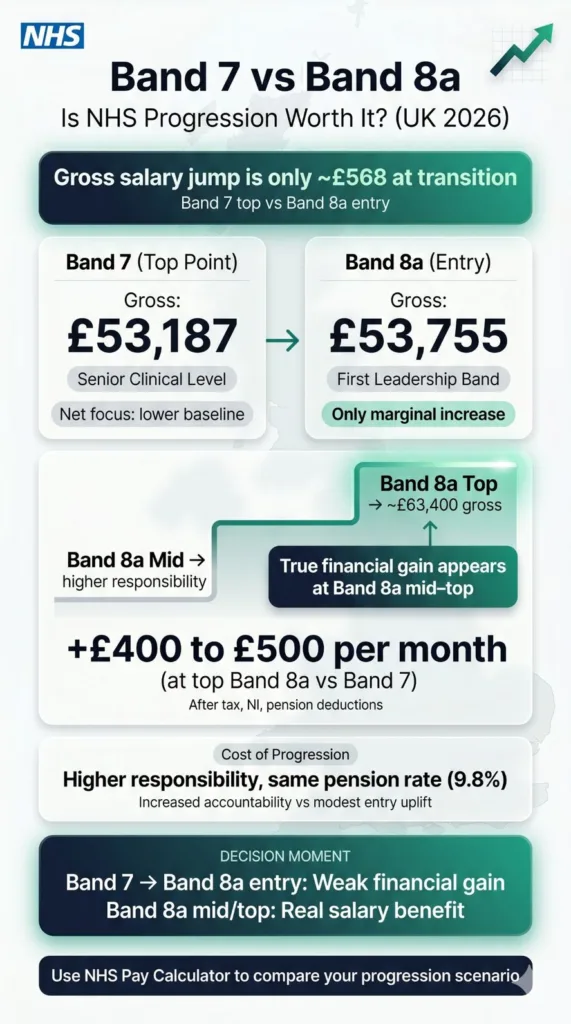
NHS Band 7 vs Band 8a progression shows a minimal immediate pay increase, with Band 7 top point at around £53,187 and Band 8a entry at about £53,755 — a gross difference of only ~£568 per year. In take-home terms, this uplift is negligible due to tax, NI, and a consistent NHS pension contribution of around 9.8%. The real financial benefit appears at higher Band 8a points, where salaries reach roughly £63,400, increasing monthly take-home pay by about £400–£500 compared to Band 7 top, making progression more worthwhile in the medium term rather than at entry level.
FAQs: NHS Band 7 take Home Salary 2026
What is the NHS Band 7 take home pay per month in 2026?
At entry point (£46,148), a Band 7 worker in England takes home approximately £2,890 per month. At mid-point (£49,787) it is around £3,080, and at top point (£53,187) approximately £3,200. Scotland is lower by £100–£140 per month due to higher income tax rates. These figures assume standard pension contributions and no student loan.
Does Band 7 pay higher rate income tax in 2026?
In England, only the Band 7 top point (£53,187) crosses into the 40% higher rate — on approximately £2,917 of earnings above the £50,270 threshold. In Scotland, the 42% higher rate applies above £43,663, meaning all three Band 7 pay points are partially in the higher rate band.
How much NHS pension do Band 7 staff pay in 2026?
Entry point (£46,148) sits in the 8.3% tier — around £319/month. Mid and top points (above £47,847) move into the 9.8% tier — approximately £406 to £434 per month. This tier jump is the main reason take-home pay gains are smaller than the gross pay increase suggests.
What is the Band 7 hourly rate in 2026?
Band 7 hourly rates range from £23.66 at entry point to £27.28 at top point, based on a standard 37.5-hour NHS working week. Unsocial hours enhancements — 30% for weekends and 60% for nights — apply on top of these standard rates.
Is Band 7 a good NHS salary?
Band 7 is a senior NHS salary that places workers in the top quartile of UK earners. However, after Scottish income tax, pension contributions, and student loan repayments, the effective take-home for many Band 7 staff — particularly in Scotland or those with Plan 2 loans — is materially lower than the gross figure suggests. For advanced clinical roles, Band 7 is competitive but the deduction load is significant.
Summary: NHS Band 7 Take Home Pay Key Facts 2026
- Band 7 gross salary range: £46,148 to £53,187 in 2026/27
- Monthly take-home in England: £2,890 to £3,200 depending on pay point
- Monthly take-home in Scotland: £2,760 to £3,060 — lower due to 42% higher rate above £43,663
- Pension contribution: 8.3% at entry, 9.8% at mid and top points
- Roles covered: ANPs, senior radiographers, specialist midwives, charge nurses, lead AHPs, service managers, senior pharmacy and biomedical staff
- Student loan Plan 2 deduction at mid-point: approximately £167/month
- Hourly rate: £23.66 to £27.28 standard, plus unsocial hours enhancements
- The Band 7 to 8a entry transition offers minimal immediate take-home gain

Daniel Carter is a senior NHS Payroll Accountant with over 10 years of experience in Agenda for Change pay structures, tax, and pensions. He created the NHS Pay Calculators platform to help NHS staff easily understand their take-home pay, sick pay, maternity pay, and pension entitlements through simple, accurate online tools.